

A microwave and a fridge sit in the middle of an Indian kitchen, so their doors catch everything: oil from tadka, sticky fingerprints, tea splashes and dust that sticks to the grease. A damp cloth smears it around. A proper clean takes about 10 minutes for both.
Before you start: switch off and check the finish
- Unplug the microwave and switch the fridge off at the plug, or at least keep foam well away from the plug, the control panel and any vents.
- Stainless steel doors (most double-door and many single-door fridges) take a foam degreaser well, as long as you wipe it off and buff dry along the grain.
- Glass doors on microwaves and some fridges are easy: foam, wipe, dry.
- Painted, printed or glossy coloured doors (many single-door fridges have a printed floral or coloured panel) can lose their print or shine with strong cleaners. Use mild soapy water there, or test a small hidden spot first.
- Touch panels and displays: never spray on them. Wipe them with a barely damp cloth.
What you need
- A foam kitchen cleaner
- A soft microfibre cloth and a second dry cloth
- A soft sponge for stuck-on spots, and an old toothbrush for handles and door edges
- Gloves
How to clean a greasy microwave door, step by step
- Unplug it. Let it cool if you have just used it.
- Spray onto the cloth, not the microwave. Shake the can and put a layer of foam on your cloth or sponge. This keeps foam out of the vents and the keypad.
- Wipe the door and the handle. Work from top to bottom. For greasy patches, leave the foam on the door for 30 to 60 seconds before you wipe.
- Do the edges. Grease collects where the door meets the body and around the handle. Use the toothbrush with a little foam there.
- Wipe again with a damp cloth to take off any foam left behind, then dry the door.
The inside of the microwave touches food, so keep the degreaser out of it. Heat a bowl of water with a few slices of lemon for 3 to 4 minutes, leave the door shut for 5 more minutes, then wipe the softened splashes off with a damp cloth.
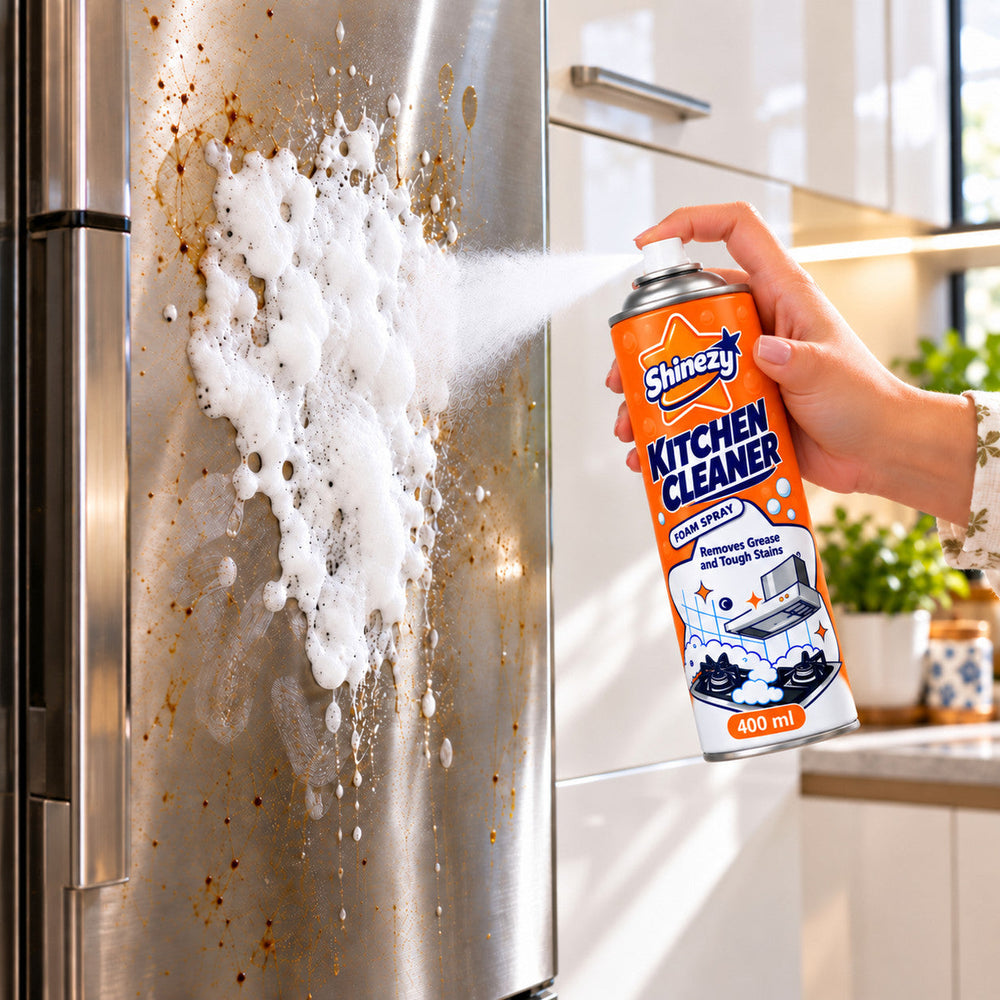
How to clean a steel or glass fridge door
- Clear the door. Take off magnets and stickers so you can clean under them.
- Foam the greasy areas. Spray an even layer on the handle area and any sticky patches from 15 to 20 cm away. Keep it off the water dispenser, the display and the door seals.
- Wait 30 to 60 seconds. Give old, sticky marks 2 to 3 minutes.
- Wipe along the grain. Brushed steel has fine lines. Wipe in their direction, not in circles, so you do not leave swirl marks.
- Damp wipe, then dry. Go over the door with a clean damp cloth, then buff it dry. Drying is what stops streaks and water spots on steel.
The door seal (gasket)
The rubber seal around the fridge door collects crumbs and black spots. Clean it with warm soapy water and an old toothbrush, then dry it. Do not use a degreaser on it, as strong cleaners can dry out rubber, and a damaged seal lets cold air leak out.
Mistakes to avoid
- Spraying straight at vents, keypads or displays. Liquid can get inside. Spray onto the cloth instead.
- Scrubbers and steel wool. They scratch steel and glass, and scratches hold dirt.
- Leaving foam to dry on. Always wipe it off with a damp cloth and dry the door.
- Mixing cleaners. Never mix a kitchen cleaner with bleach or any other product.
- Cleaning near open food. Close the fridge and keep food away from where you spray.
How often
- Wipe the handles every couple of days, as they are touched most.
- Clean the full doors once a week if you cook daily.
- Clean the microwave inside straight after a spill, before it bakes on.
The cleaner we make for this
Shinezy Kitchen Cleaner Foam Spray is a foam degreaser for gas stoves and burners, chimney hoods and steel baffle filters, tiles and backsplash, steel sinks and taps, kitchen slabs, and the outside of steel and glass appliance doors. Shake the can, spray an even layer, leave it for 30 to 60 seconds, scrub lightly and wipe with a damp cloth. Rinse food-contact surfaces with water. Do not use it on aluminium, zinc or galvanised metal, natural marble or unsealed stone, painted or lacquered wood, or any hot surface.
It is an extremely flammable aerosol that can cause severe skin burns and eye damage, so wear gloves and eye protection, keep it away from heat and flame, and keep it out of reach of children.
For the rest of the kitchen, see our guides to cleaning a kitchen sink and taps, removing grease from kitchen tiles and cleaning a greasy gas stove.