

The monsoon changes how a home gets dirty. Humid air makes kitchen grease sticky and slow to dry, bathrooms stay damp all day, and every trip outside brings mud in on your shoes. Cleaning the same way you do in winter is often not enough. This guide covers the three places that suffer most, the kitchen, the bathroom and your shoes, with a simple weekly routine.
Why the monsoon makes cleaning harder
- Nothing dries. Wet cloths, damp corners and wet shoes stay wet for hours, which brings smells and mould.
- Grease gets tacky. In humid air, cooking oil on tiles and the chimney stays sticky and catches dust.
- Mud travels. It comes in on shoes and spreads to floors, doormats and shoe racks.
What you need
- A foam kitchen degreaser and a non-scratch pad
- A toilet cleaner and a toilet brush
- A shoe cleaner and a shoe brush
- Plenty of dry cloths (keep a spare set, because cloths dry slowly in the rains)
- Gloves, newspaper and a few silica gel packets
The kitchen
- Wipe the slab and stove dry after cooking. Moisture plus oil is what makes the sticky film.
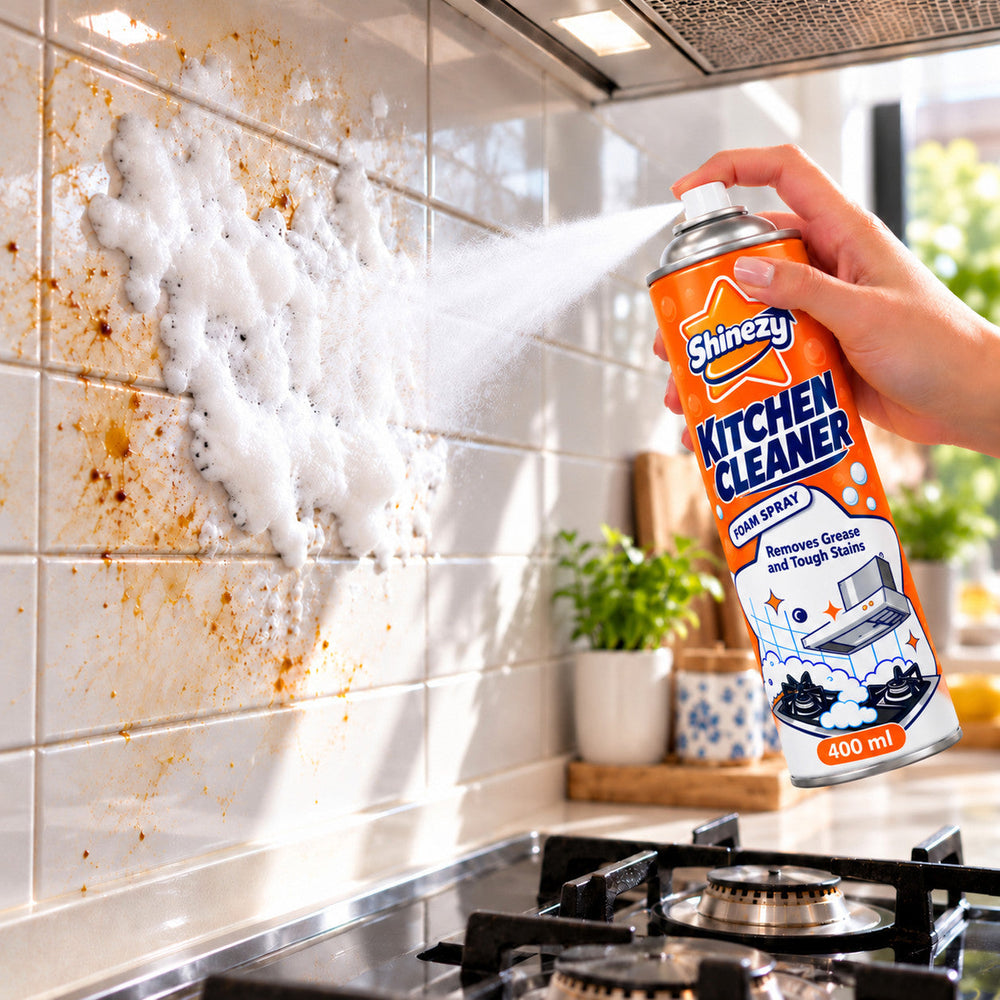
- Degrease tiles and the backsplash weekly instead of monthly. With the gas off and the stove cool, spray foam from 15 to 20 cm, leave it 30 to 60 seconds, scrub lightly, wipe with a damp cloth and dry.
- Keep the chimney filter on schedule. More indoor cooking on rainy days means more grease. Steel baffle filters can be degreased; aluminium mesh filters need a cleaner made for aluminium.
- Dry the sink and drain basket at night so food scraps do not start to smell.
- Air the kitchen. Run the chimney or an exhaust fan while cooking and for a few minutes after.
The bathroom and toilet
- Keep the bathroom door or window open after a bath, and run the exhaust fan if you have one.
- Squeegee or wipe the floor so water does not sit in corners and grout lines.
- Clean the toilet bowl every week. Damp weather and hard water mean rings and stains build up faster. Do not mix toilet cleaners with any other product.
- Black spots on walls or grout are usually mould. Use a cleaner made for mould on that surface and follow its label.
Shoes
- Keep a doormat and a shoe tray at the door so wet, muddy shoes stop there.
- Let mud dry, then brush it off. Rubbing wet mud pushes it deeper into canvas and mesh.
- Clean shoes once they are dry, with foam and a brush, and wipe them with a damp cloth.
- Dry wet shoes with paper inside, at room temperature, under a fan if needed. Keep them away from heaters, irons and hair dryers.
- Store them in an open rack with a silica gel packet, not in closed plastic bags.
- Save white pairs for dry days and wear an older pair in heavy rain.
A weekly monsoon cleaning routine
- Day 1, kitchen: degrease the stove top, tiles and backsplash, and wipe the outside of the chimney hood.
- Day 2, sink and slab: clean the sink, taps and drain basket, and dry everything.
- Day 3, toilet and bathroom: clean the toilet bowl and wipe down damp corners.
- Day 4, shoes: brush off dried mud, clean the week's muddy pairs and leave them to air-dry.
- Every day: wipe the kitchen slab dry, open windows when it is not raining, and hang cloths and towels where air moves.
Mistakes to avoid
- Mixing cleaners to make them stronger. Some mixtures, such as toilet cleaners with bleach, release dangerous gas.
- Drying shoes on a heater or in an oven. Heat warps soles and melts glue.
- Leaving wet cloths bunched up. They start to smell within hours in humid air. Rinse and hang them open.
- Spraying aerosols near a flame. Turn the gas off and let the stove cool before you clean it.
- Using a kitchen degreaser on the wrong surfaces, such as aluminium, marble or painted wood.
How often
- Kitchen tiles and stove: weekly during the rains.
- Toilet bowl: once a week.
- Daily-wear shoes: after any muddy day, once they are dry.
The cleaners we make for this
Shinezy Kitchen Cleaner Foam Spray (400 ml, with a microfibre cloth) is for gas stove tops and pan supports, chimney hoods and stainless-steel baffle filters, tiles and backsplash, steel sinks and taps, and kitchen slabs. Shake, spray from 15 to 20 cm, leave 30 to 60 seconds (2 to 3 minutes for old grease), scrub lightly with a non-scratch pad, wipe with a damp cloth and rinse food-contact surfaces. Do not use it on aluminium (including aluminium mesh chimney filters and cookware), zinc or galvanised metal, marble or unsealed stone, painted or lacquered wood, or any hot surface. It is an extremely flammable aerosol that can cause severe skin burns and eye damage; wear gloves and eye protection.
Shinezy Toilet Cleaner Foam Powder comes as a box of 4 single-use 100 g pouches. Pour one pouch into the bowl, and thick blue foam rises up the bowl by itself. Leave it 2 to 3 minutes, brush lightly, wait 5 minutes and flush. It is for the toilet bowl only. Never mix it with other products, as that can release chlorine gas. It can cause severe skin burns and eye damage, so wear gloves.
Shinezy Shoe Cleaner Foam Spray (400 ml, with a wooden shoe brush) is for white and coloured sneakers, canvas and mesh, leather and faux leather, and rubber soles. Shake, spray foam, scrub gently (a soft cloth on leather), wipe with a damp cloth and air-dry at room temperature. It is not for suede or nubuck. It is an extremely flammable aerosol that can cause serious eye damage and skin irritation; wear gloves and eye protection.
Keep all of them out of reach of children. For more detail, see our kitchen cleaning checklist, how to clean a black ring in the toilet and how to dry and store sneakers.