

Spills on a gas stove get cooked on a little more every time you light the burner. The longer they stay, the harder they are to shift, and blocked burner holes give you a weak, uneven flame. Here is a way to clean the whole stove without hours of scrubbing.
Safety first
- Turn off every burner and close the gas at the regulator or the pipeline valve.
- Wait until the stove is completely cool.
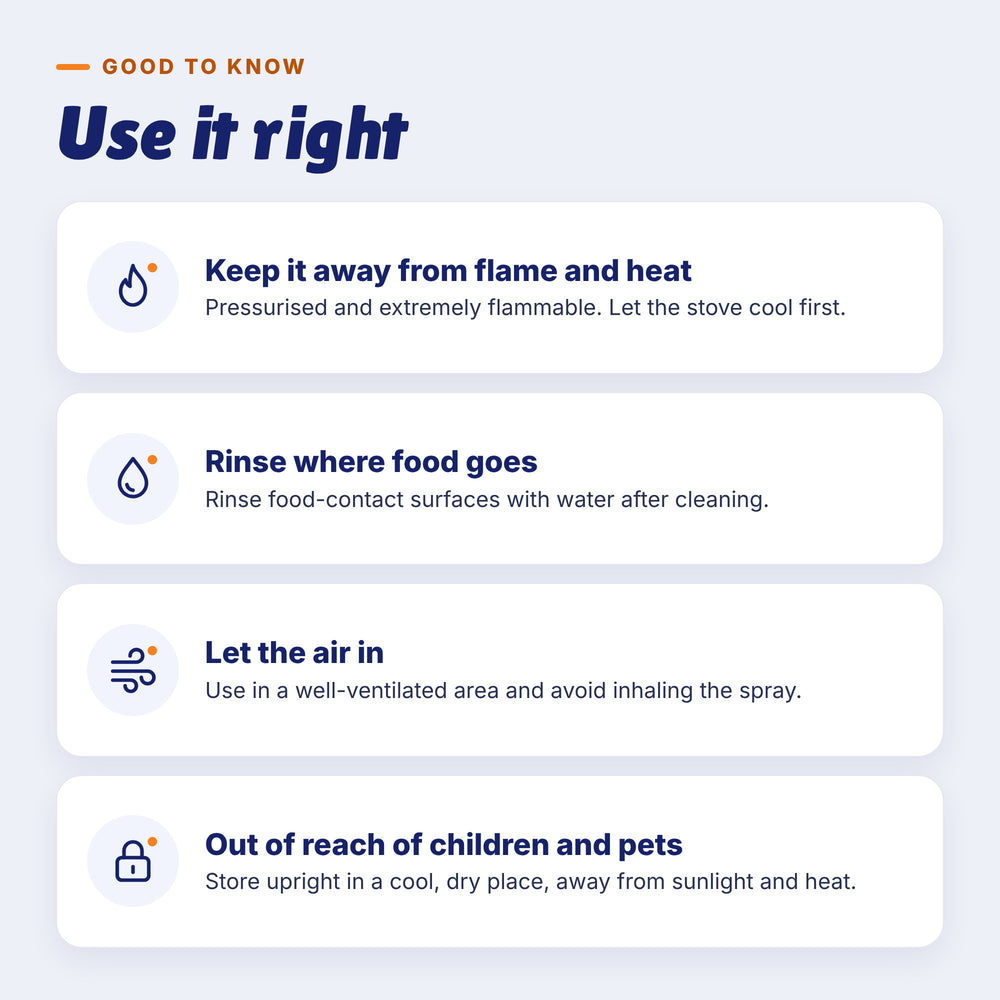
- Open a window. Never spray an aerosol cleaner near a flame, a spark or anything hot.
What you need
- A foam kitchen cleaner
- Two cloths: one damp, one dry
- A soft brush or old toothbrush
- A toothpick for the burner holes
Step 1: Take off the loose parts
Lift off the pan supports, burner caps and burner heads. Keep track of which burner each part came from, because the sizes differ.
Step 2: Foam the stove top
Shake the can, hold it 15–20 cm away and spray an even layer of foam across the stove top. Leave it for 30–60 seconds, or 2–3 minutes for old, baked-on grease, then scrub with a soft brush or a non-scratch pad and wipe with a damp cloth. Repeat on any patch that still feels sticky.

On a glass-top stove, use only a soft cloth or sponge. Steel scrubbers scratch glass.
Step 3: Clean the pan supports and burner parts
Foam the pan supports and burner caps, wait, then scrub them with a soft brush and wipe them clean. If a burner part is bare aluminium, wash it in warm soapy water instead, because alkaline cleaners can discolour aluminium. If you are unsure what a part is made of, test a small hidden spot first.
Clear blocked flame holes with a toothpick or a soft brush. Do not force the holes wider.
Step 4: Rinse, dry and refit
Rinse the loose parts with water and dry them completely. Water left inside a burner makes the flame sputter. Fit each part back in its place, open the gas and check that every burner lights with an even blue flame.
Glass top vs steel top stoves
Glass top
Glass shows every smear. Use only a soft cloth or non-scratch pad, never steel wool or a scraper unless the stove maker allows it. After cleaning, finish with a clean damp microfibre cloth and buff dry to avoid streaks.
Stainless steel top
Wipe in the direction of the steel's grain. Steel hides light marks but shows water spots, so dry it with a microfibre cloth after the final wipe.
Common mistakes
- Cleaning while the stove is warm. Cleaner dries too fast and leaves marks, and aerosols near heat are a fire risk.
- Soaking aluminium or brass burners in a strong degreaser. It can dull or darken bare metal. Warm soapy water is enough.
- Putting burners back wet. The flame sputters or will not light evenly.
- Using steel wool on glass or enamel. It scratches, and scratches hold grease.
- Mixing cleaning products. Use one cleaner at a time.
How often to clean a gas stove
- Daily: wipe spills with a damp cloth once the stove has cooled.
- Weekly: foam the top and pan supports if you cook daily.
- Monthly: take the burners off, wash them and clear the flame holes.
- If a flame still burns yellow or uneven after cleaning, check that the burner holes are clear and the parts are dry. If it continues, have the stove serviced.
The cleaner we make for this
Shinezy Kitchen Cleaner Foam Spray is made for gas stoves and burners, chimney hoods, tiles, sinks and kitchen slabs. It is a pressurised, flammable aerosol, so let the stove cool before you clean it and keep the can away from heat and flame. Do not use it on aluminium, zinc or galvanised metal, natural marble or unsealed stone, or painted or lacquered wood.
More kitchen help: removing grease from kitchen tiles, cleaning a kitchen chimney filter and cleaning a kitchen sink and taps.