

The wall behind the stove catches a fine spray of oil every time you fry. Dust sticks to that film, and over a few weeks it becomes a tacky yellow-brown layer that plain water only smears around.
Why wall grease is hard to shift
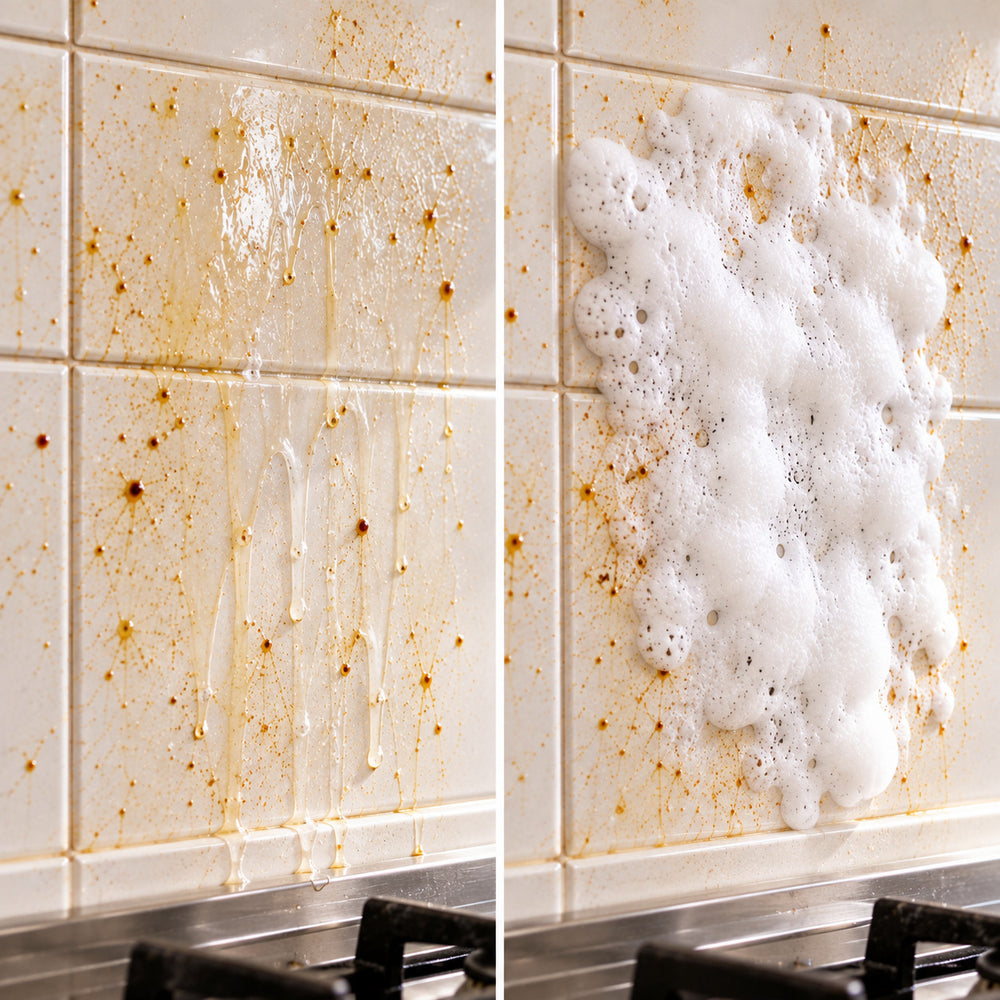
Grease needs time in contact with a cleaner before it loosens. A thin liquid runs down a vertical tile within seconds, so it never gets that time. Foam clings to the wall and stays where the grease is until you wipe it off.
What you need
- A foam kitchen cleaner
- Two or three cloths
- A soft brush or old toothbrush for the grout
- Gloves
Steps
- Make sure the stove is off and the wall is cool, and open a window.
- Wipe away loose dust and crumbs with a dry cloth.
- Shake the can and spray an even layer of foam from 15–20 cm away. Work on one section at a time.
- Leave it for 30–60 seconds. Give old, sticky build-up 2–3 minutes.
- Wipe with a damp cloth. Rinse the cloth often so you lift the grease off instead of spreading it.
- On grout lines, work the foam in with a soft brush, then wipe.
- Go over the wall once more with a clean damp cloth and let it dry.
Check the surface first
The foam is made for kitchen tiles and backsplashes. Do not use it on natural marble or unsealed stone, or on painted walls and lacquered wood next to the tiles. If you are unsure about a surface, test a small hidden patch first.
How to slow the build-up
- Wipe the backsplash once a week, before the film hardens.
- Run the chimney while you fry and for a few minutes afterwards.
- Cover the pan with a lid or splatter guard when you deep-fry.
The cleaner we make for this
Shinezy Kitchen Cleaner Foam Spray comes out as a thick foam that stays on tiles and backsplashes while it works. It is also made for gas stoves, chimney hoods, sinks and kitchen slabs. Keep it away from heat and flame, and rinse any surface that touches food with water after cleaning.